Why glute activation matters for hip replacement & longevity
Strong, responsive glutes are central to hip health. They power hip extension, stabilize the pelvis, and unload arthritic joints—all crucial for maintaining mobility and protecting a hip replacement. Preoperative strengthening (“prehabilitation”) and early, targeted activation after surgery both improve outcomes for older adults by building a stronger platform for recovery.
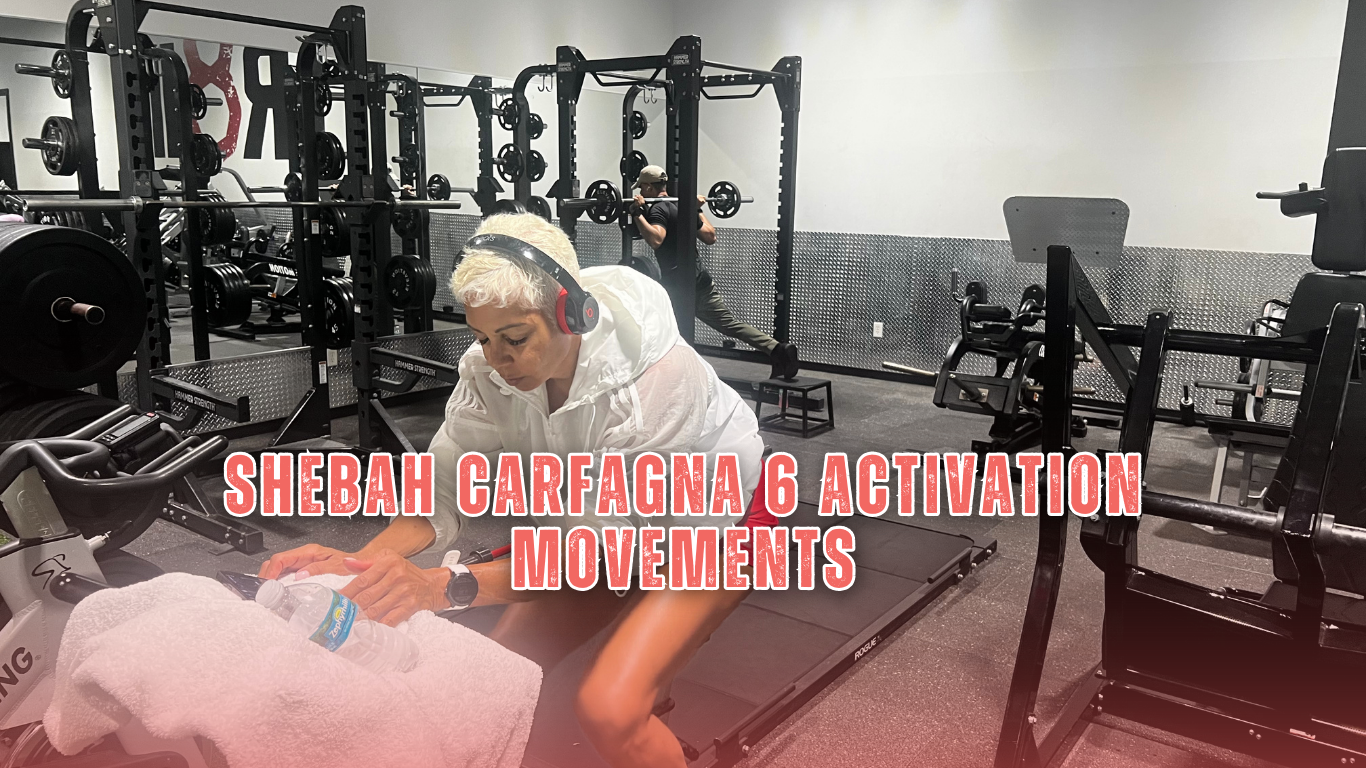
Below, I lay out the Shebah Carfagna 6 Activation Movements—simple, low-risk exercises that target the gluteus maximus and gluteus medius, address ankle mobility and neuromuscular control, and can be scaled for prehab and post-op rehab phases.
The Science in a Snapshot (key evidence)
- Prehab boosts outcomes: Exercise programs before total hip replacement can improve postoperative function and shorten recovery when tailored to older adults.
- Posterior-chain activation: Romanian deadlifts and deadlift variants recruit hamstrings and gluteus maximus strongly and are effective posterior-chain exercises—useful for restoring hip extension strength.
- Squat stance affects glute activation: Sumo/wide-stance and externally rotated squats change glute recruitment and can increase lateral and posterior glute engagement. Use stance variations to bias targeted glute regions.
- Glute bridges & single-leg progressions: Glute bridges produce high glute EMG, and single-leg or banded variations further amplify activation—excellent for isolating hip extension while keeping lumbar load low.
- Ankle mobility matters: Adequate dorsiflexion and ankle control affect whole-leg mechanics. Poor ankle mobility can alter squat pattern and hip loading; ankle drills improve balance and reduce fall risk.
Shebah Carfagna 6 Activation Movements—How to do them, why they work, progressions
1) Romanian Deadlift (RDL)—light / hip-hinge activation
Cue: Soft knee bend, hinge at the hips, keep spine neutral, push hips back, and feel posterior chain lengthen. Pause and squeeze glutes at the top.
Why: RDL emphasizes hip extension and activates hamstrings and gluteus maximus without deep knee flexion—ideal for rebuilding hip extension strength. EMG literature shows posterior chain recruitment in deadlift variants.
Progression: Bodyweight → light kettlebell/dumbbell → band-resisted RDL → single-leg RDL (when cleared).
2) Sumo Squat (wide-stance squat)—lateral and posterior glute focus
Cue: Wide stance, toes slightly out, sit back between heels, keep knees tracking toes, and drive up through glutes.
Why: Wide stance and foot rotation alter muscle recruitment to bias gluteal muscles, particularly when depth is comfortable; useful for those who can’t tolerate deep conventional squats.
Progression: Box-assisted sumo squat → goblet sumo squat → add load as tolerated.
3) Glute Bridge (double → single-leg)—isolated hip extension
Cue: Lie on back, knees bent, feet hip-width; press through heels, squeeze glutes to lift hips until knees and shoulders form a straight line; lower with control.
Why: High glute activation with low spinal load; single-leg or banded versions increase EMG and challenge stability—valuable for early post-op or prehab phases.
Progression: Double-leg bridge → banded bridge → single-leg bridge → elevated or loaded bridge.
4) Side Kick (standing or prone hip abduction/kick)
Cue: Stand tall or lie on your side; lift your leg laterally with control (no hip hike), pause, and return slowly. Keep pelvis level.
Why: Targets gluteus medius, a key stabilizer for pelvic control during gait. Lateral strength reduces compensations that stress the hip joint.
Progression: Bodyweight → ankle weights → banded side kicks → lateral band walks.
5) Ankle Rotations & Dorsiflexion drills
Cue: Seated or supine, rotate the ankle in slow circles; then actively point (plantarflex) and flex (dorsiflex) the foot. Standing dorsiflexion wall drills: toes near the wall, knee forward to the wall without heel lifting.
Why: Restoring ankle mobility improves squat mechanics, balance, and gait—all important for reducing abnormal hip loads and preventing falls after hip surgery.
Progression: Passive ROM → active ROM → loaded gait drills.
6) Point & Flex (neural drive + foot activation)
Cue: Seated or lying down, point toes away (plantarflex), then flex toward you (dorsiflex). Combine with ankle rotations and then quickly transition into bridges or mini-squats to enhance foot-to-hip neuromuscular connection.
Why: Improves lower-limb proprioception and helps re-establish the kinetic chain from foot to hip, which is especially useful after periods of immobilization. Combined proprioceptive and strengthening programs improve balance and function.
Progression: slow control → rhythmic point/flex with breath → integrate into dynamic stepping or balance drills.
Sample mini-session (prehab/early post-op approved by therapist)
- Warm-up: 5–8 minutes gentle walking or cycling (if cleared)
- Circuit (1–3 rounds):
- Ankle rotations & point/flex—30 sec each foot
- Glute bridge (double)—12–15 reps
- Romanian deadlift (light)—8–12 reps
- Side kicks—10–12 reps per side
- Sumo squat (bodyweight or box)—10–12 reps
- Finish: gentle walking/gait practice.
- Adjust sets/reps to a pain-free range. Use RPE and therapist guidance.
Contraindications & Safety
- Always get medical clearance before prehab or after surgery. Progress only as the surgeon/physio approves.
- Avoid deep-loaded squats or ballistic movements until cleared. Pain that’s sharp, increasing, or accompanied by swelling should be evaluated.
- Individualize for implants, surgical approach, and range-of-motion restrictions.
Closing / Call to Action
The Shebah Carfagna 6 Activation Movements combine posterior-chain strengthening, lateral hip stability, and distal mobility—a practical, evidence-informed set you can use before surgery to build resilience or after surgery (as allowed) to rebuild confidence and independence.
Top supporting studies & sources (quick list)
- Prehabilitation for older adults awaiting total hip replacement—systematic/clinical evaluation.
- Electromyographic activity in deadlift exercises—posterior chain activation (RDL data).
- Glute activation across squat variations—sumo/wide stance effects.
- EMG comparisons show that the single-leg glute bridge is excellent for glute activation.
- The ankle’s dorsiflexion role in performance and injury risk—importance for gait and hip mechanics.
- Combined strengthening and proprioceptive training improves stability and functional outcomes.
Medical Disclaimer: This article is for informational purposes only and does not constitute medical advice. Always consult with a qualified healthcare provider regarding your health or any medical conditions.